Hong Kong-Bound Supply & Going Global: 90% of Mainland Food Manufacturers Stumble on These 3 Misconceptions
2026-10-02 to 2026-10-03Hong Kong has a population of just over 7 million, yet it imports about HK$170 billion worth of food a year. It is the third-largest destination for China’s agricultural exports, after the United States and Japan.
Supplying Hong Kong and going global is the trend right now. But even with such an opportunity at the door, many Mainland food manufacturers fail to seize it and can only watch as their peers get their products onto Hong Kong shelves.
To be honest, we have seen too many Mainland manufacturers miss out on Hong Kong supply opportunities. Their own conditions are often outstanding. What really stops them is a mistaken understanding of what supplying Hong Kong and going global actually involves.
The following misconceptions are truly worth reading carefully.
Misconception 1: Delivering goods to Hong Kong is the same as delivering goods to another province
In legal terms, Hong Kong is a separate customs territory, and food regulation there operates under a different set of laws.
For the same batch of goods, when leaving the Mainland it counts as an “export” on the Mainland side, governed by the Food Safety Law and the Law on Import and Export Commodity Inspection; when entering Hong Kong it counts as an “import” on the Hong Kong side, governed by Hong Kong legislation. One exit and one entry — both ends must be managed.
Before goods go overseas, factories need to complete two mandatory procedures:
First, the production factory must complete registration as an export food production enterprise with Customs — this is a long-term qualification, but when relevant enterprise information changes, an application for material change must be made;
Second, before each batch is exported, it must be declared to Customs in accordance with the law, undergo inspection and quarantine, and obtain commodity inspection and health certificates.
Treating Hong Kong supply as “cross-province delivery” is precisely the root misconception that generates a series of problems: not knowing that certificates are required, not knowing that Hong Kong SAR standards must be met, and never even considering the legal liability on the Hong Kong side.
So the first lesson in supplying Hong Kong is not learning the procedures, but changing ingrained perceptions and recognising the fact that “this is an export”.
Misconception 2: If a product is compliant in the Mainland, it is naturally compliant in Hong Kong
Mainland pre-packaged food currently follows the General Standard for the Labelling of Prepackaged Foods and the General Standard for the Nutrition Labelling of Prepackaged Foods: the nutrition facts table mandatorily adopts “1+4” — energy, plus protein, fat, carbohydrate and sodium.
Hong Kong’s Food and Drugs (Composition and Labelling) Regulations, however, clearly stipulate that nutrition labelling must mandatorily show “1+7” and is usually bilingual in Chinese and English — in addition to energy, it must indicate protein, total fat, saturated fat, trans fat, carbohydrates, sugars and sodium.
In addition, the two places differ greatly in the regulation of values, dates, allergens and claim wording. For example, for additives, the Mainland only requires additives to be stated in words, whereas Hong Kong requires marking with international standard numbers; for dates, the Mainland only requires the production date and shelf life, whereas Hong Kong requires “best before” or “use by”, which have different legal meanings and cannot be mixed at will. To help everyone understand Hong Kong’s retail labelling requirements, we have downloaded the official “Technical Guidance Notes on Nutrition Labelling and Nutrition Claims” — click here to view.
Therefore, having a Mainland test report does not mean you can go straight onto Hong Kong shelves. “Mainland compliant” only means you have passed the Mainland hurdle. To supply Hong Kong smoothly, there is much more to do.
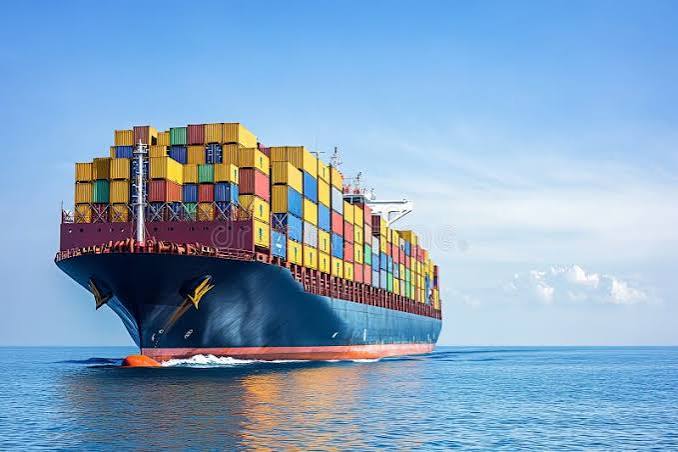
Misconception 3: Once Mainland Customs has released the goods, there is nothing to worry about entering Hong Kong
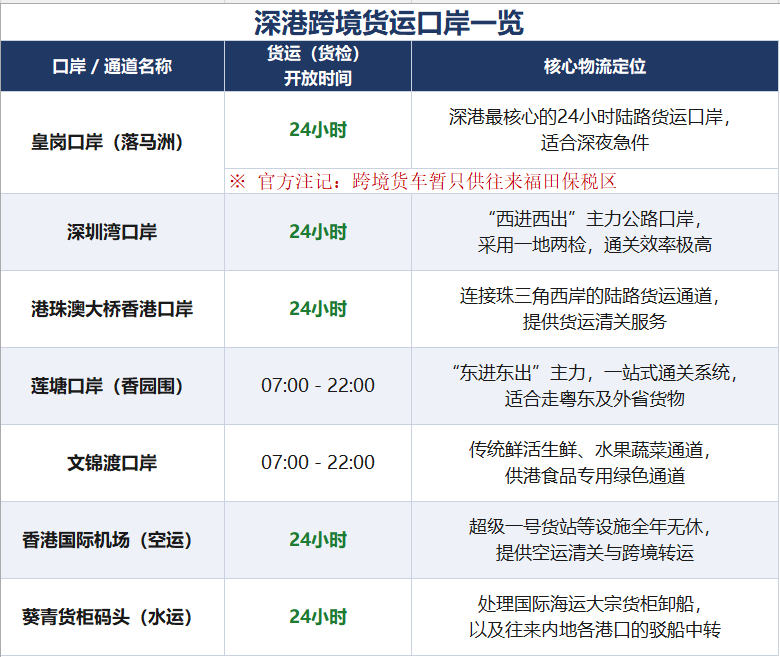
Quite the opposite — release at a Mainland port only means the batch has passed the Mainland hurdle. As mentioned earlier, Hong Kong is a separate customs territory with its own complete set of food laws and enforcement system.
Specifically, after goods enter Hong Kong they must pass three more hurdles. The first is the port hurdle: all imported goods must be listed on the manifest, and meat, poultry and eggs must also be accompanied by a health certificate issued by the competent authority of the place of origin. The second is the import registration hurdle: under the Food Safety Ordinance, food importers must register with the Centre for Food Safety and keep transaction records — this means that for every batch, it is possible to trace who stored it and who it was sold to, and find the responsible person. The third is the market sampling hurdle: after products are on the shelf, the Centre for Food Safety conducts regular sampling tests on food in the market. Once exceedances or labelling violations are detected, the response is a whole combination of measures — suspension of sale, removal from shelves, recall, prosecution, and in serious cases suspension of import arrangements from the relevant place of origin.
Regulation is not one door, but three hurdles.
Summary
Compliance is not a cost, but an entry ticket
The root cause of these misconceptions is that many manufacturers apply their domestic sales experience wholesale to a cross-border business.
Hong Kong’s greatest deceptive quality for Mainland manufacturers is precisely that it “doesn’t look foreign” — the language is mutually intelligible and the distance is close enough, so they apply past experience and treat Hong Kong supply as cross-province delivery.
The way to break through lies in the root cause itself.
Change your mindset: treat “supplying Hong Kong” as “exporting”. Acknowledge that it is a business to be handled with foreign trade thinking — Hong Kong looks close, but in terms of rules it is far away.
Change your method: experience is just a feeling; rules are facts.
Change your calculation: do not treat compliance as a cost to be saved. In the Hong Kong supply business, qualifications, registration, labelling, declaration and so on are part of the business itself.
Registration, testing and label checking buy you the qualification not to be fined, not to be prosecuted, and to enter overseas markets smoothly. Only with the ticket can you grasp a broader market.
These pitfalls can actually all be avoided in advance — provided someone tells you in advance where the thresholds are.
Jade Premium focuses on compliance access and market layout for Mainland food manufacturers going global in Hong Kong: from qualification registration and filing, inspection and quarantine and document coaching, to port connection between the two places and channel implementation, helping you clarify once and for all “can you supply Hong Kong, which hurdles must you pass, and which step to start with” — and supporting you all the way.